
The Shadows of Slavery
There are many shadows of slavery that can be seen in the past in the forms of artifacts and stories, and shadows of the present-day forms of slavery that still exist.
Shackles
Looking at these shackles, we can see the shadows of slavery – the long lasting impacts we still see today.
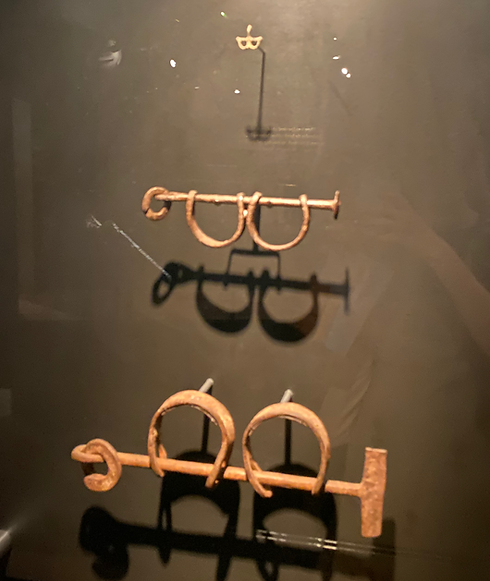

15th-19th Centuries
The Middle Passage
“For four centuries, slavers sailed along the western African coast to pack the hulls of their ships with “a full complement of negroes.” Millions of captive Africans were loaded onto slave ships as commodities certain to bring a profit. The traumatic journey from western Africa to the Caribbean and the Americas–known as the Middle Passage–was a mixture of captivity and commerce. Enslaved Africanss were dispersed throughout the Atlantic world and forced to leave their homeland and loved ones behind.”
Poster of run away slave add “One, negro BOY, aged 25 or twenty-six years”
"Under slavery, black men were often referred to as "boy," regardless of their age. This insult served as a reminder that black men were excluded from the norms of white manhood, which emphasized freedom, property ownership, self-reliance, and full participation in the public sphere."

Memory Of Slavery

'The Scourged Back', an 1863 photo of a formerly enslaved man named 'Peter', which solidified public support for the abolition of slavery (William D. McPherson and J. Oliver (public domain))
In the Accidental Slaveowner, Mark Auslander introduces the idea of memory. The memory of slavery can be seen in a romantic, glorified way as seen by the white community in Oxford, Georgia, and their story of Kitty.
Trump’s America aims for a memory that glorifies the past and wants to hide the cruelty of slavery. He aims to take away exhibits that show the memory of slavery in its harsh, cruel light.
These are artifacts from the museum that show history in its realistic, horrible, raw light, of the horrors of chattel slavery. These are the artifacts Trump wants gone from the history of the US.
Convict Leasing
System
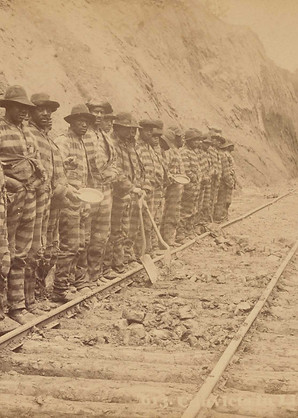
Convict-leasing systems emerged after the Civil War after the South’s economy was greatly affected after eliminating slavery. Black Americans were arrested by the state for petty crimes and were leased to private employers, forced to work in difficult conditions constructing roads, growing cotton, and building railroads (Convict Leasing | National Museum of African American History & Culture).
The system eventually collapsed when reports surfaced about the treatment of leased prisoners who were routinely starved, beaten, and even killed. However, Louisiana and other states resumed control over prisoners, creating massive state-run prison farms using captive labor to fill state coffers.

Clause in the 13th amendment “except as a punishment for crime whereof the party shall have been duly convicted, shall [slavery] exist within the United States” – which set the stage for convict-leasing systems.
“...slavery is abolished, except in the case of a punishment for a crime.
And within that wiggle room, what you see in it is that there's still the possibility of extending slavery, as it were, by another name.”
- Slavery by Another Name




Read More
Black orphaned children and juvenile offenders could be bought to serve as laborers for white planters in many Southern states from 1865 until the 1940s. (Library of Congress, Prints & Photographs Division, Detroit Publishing Company Collection, LC-D428-850)
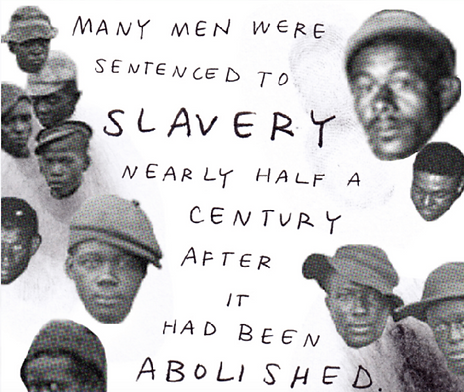
Convict Leasing In Alabama Coal Mines
Read More
After the Civil War, thousands of black prisoners were leased to work on plantations, railways, and in mines. They often were forced to work under deadly and inhumane conditions.
21st Century Forms of Slavery – Angola
There are still forms of modern forms of slavery, one of which can be seen today with the Louisiana State Penitentiary, known as Angola. Angola was built on a former plantation and was owned by the largest slave trader. After the Civil War, work previously done by enslaved people, now was done by prisoners leased out by the state – Black Louisianians were rounded for petty crimes and sent to Angola, as the state sought ways to control the newly free. In the 20th century, the state bought the plantation, ending the leasing system but retaining the massive state-run prison farms that still continue to operate today, with prisoners working in the fields for pennies an hour. Born in slavery, Angola’s history stretches into the 21st century. Black Americans are incarcerated six times the rate of white Americans, Angola provokes questions about slavery and its legacies (Pulled from the Angola Exhibit Video in the L3 Community Galleries).

“When people say this is modern day slavery – this ain’t no modern day slavery. This shit is slavery.”
– Calvin Duncan
Exhibit sign of Angola:
The Louisiana State Penitentiary.

Calvin Duncan was falsely accused of a murder and faced 28 years in the Louisiana State Penitentiary, Angola. While at Angola, Duncan earned his GED and became one of the jailhouse lawyers:
“I didn’t want to be a cook. I didn’t want to be a janitor. I knew what I wanted. I wanted to be a lawyer.”
- Calvin Duncan
